Curriculum Vitae
Paper, glass, ink
18 x 9 x 9 in
45.7 x 22.9 x 22.9 cm
2000

Richard Humann • Curriculum Vitae • Paper, glass, ink • 18 x 9 x 9 in • 2000
In Curriculum Vitae, Richard Humann transforms the documentary record of a life into a meditation on identity, memory, and mortality. For the work, Humann cut out the letters from every document written about him or associated with his life, from birth through the opening of the exhibition in October 2000. The process destroyed an extensive archive of personal and public records, including his original birth certificate, passport, driver’s license, high school and college diplomas, art reviews, and utility bills. The extracted letters were transferred to a glass urn containing a volume of material equal to the weight and volume of his ashes had he been cremated.
The documents represent the systems through which a life is recorded, verified, and understood. Birth certificates establish identity, diplomas document achievement, passports and licenses grant official recognition, and art reviews preserve a public account of creative work. Even utility bills, seemingly insignificant records of everyday existence, provide evidence of a person’s presence in the world. Together, these documents form a conventional biography—a paper trail through which an individual’s history becomes legible to institutions and to others.
By cutting away the letters, Humann dismantles this record, destroying the documents while preserving their most basic components. The words that once communicated specific facts and established his identity lose their original meaning. Reduced to individual letters, the information becomes unreadable, and the evidence of a life is transformed into an anonymous accumulation of language. What remains is both the residue of a personal history and the material from which that history was constructed.
The glass urn introduces mortality into this act of reduction. By matching the volume of the extracted letters to the volume of his potential ashes, Humann establishes a direct equivalence between the documentary record of his life and the physical remains of his body. The urn becomes a container for two kinds of residue: the material evidence of a life as it has been recorded and the imagined remains of the person who lived it. The work asks what ultimately survives when the documents, accomplishments, and descriptions through which we define ourselves are stripped of their meaning.
The title Curriculum Vitae, Latin for “course of life,” traditionally refers to a written account of one’s education, experience, and achievements. Humann turns this familiar record inside out, presenting not a summary of his accomplishments but the physical remnants of the documents that attest to them. In doing so, he questions the relationship between a person and the accumulated evidence used to define that person.
Ultimately, Curriculum Vitae considers the difference between a life itself and the records left behind to represent it. The letters remain, but the stories they once told have disappeared. Contained within the urn, they become a quiet monument to the impermanence of identity as it is documented, preserved, and remembered.
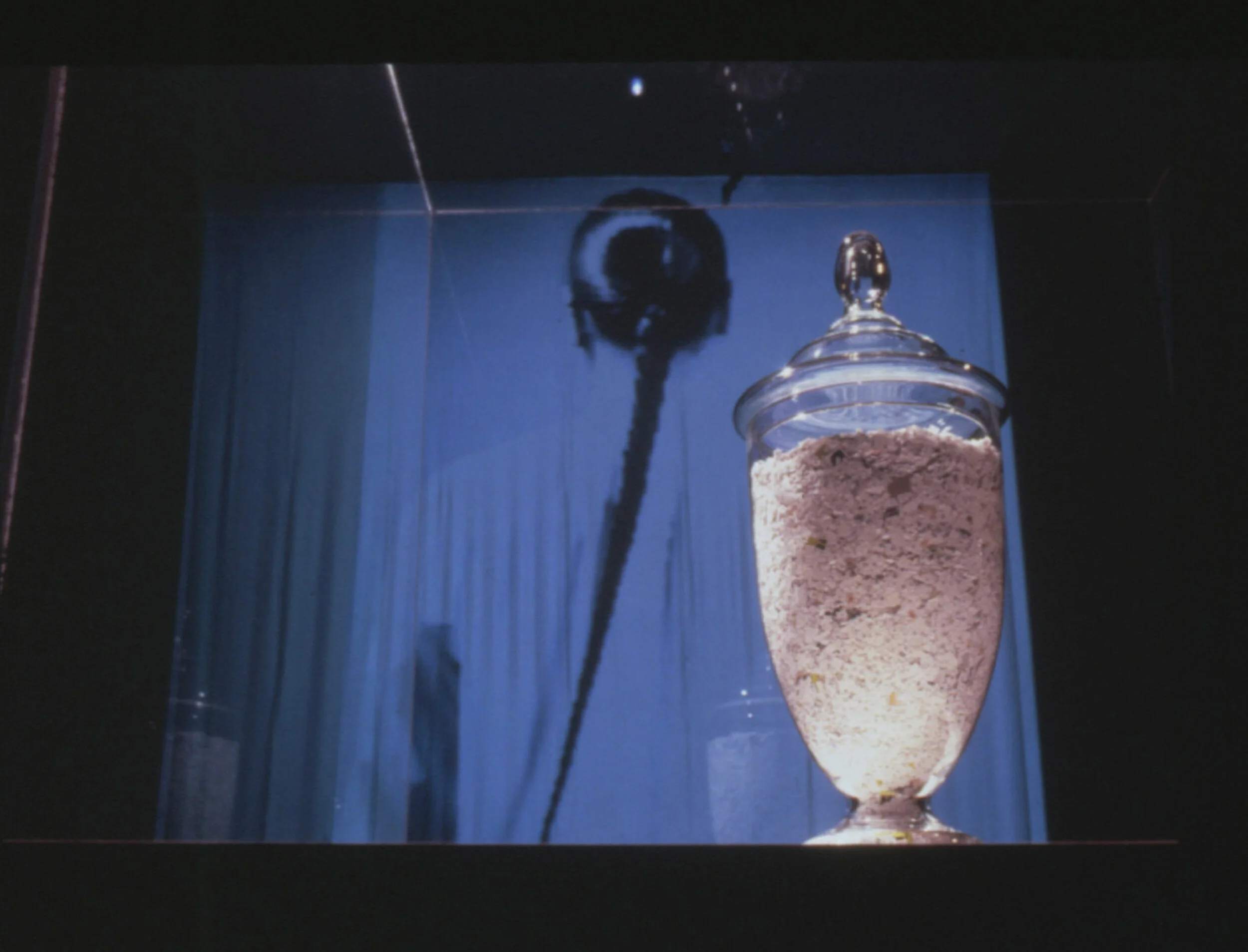
Richard Humann • Curriculum Vitae • Paper, glass, ink • 18 x 9 x 9 in • 2000
Photo credits: Joseph Silva / Richard Humann Studio