Delicate Monster
Five-channel video installation
Variable dimensions
2004

Richard Humann • Delicate Monster • Five-channel video installation • Variable dimensions • 2004
Tampere Art Museum
Tampere, Finland
Museum Director: Janne Sirén, PhD
Commissioned by the Tampere Art Museum, Delicate Monster is a five-channel video installation whose subject matter recalls the tragedy of the September 11, 2001 attack on the Twin Towers in New York City.
Multiple people were recorded telling their personal story of the events of that tragic day. The videos were then run through computer manipulation software and slowed down to create a highly pixelated and distorted imagery. The five channels of the video played at once in the massive 10,000 sq. ft. exhibition hall, where multi-track audio and video created a deep sense of confusion for the viewer in the attempt to try to capture the turmoil of that morning.
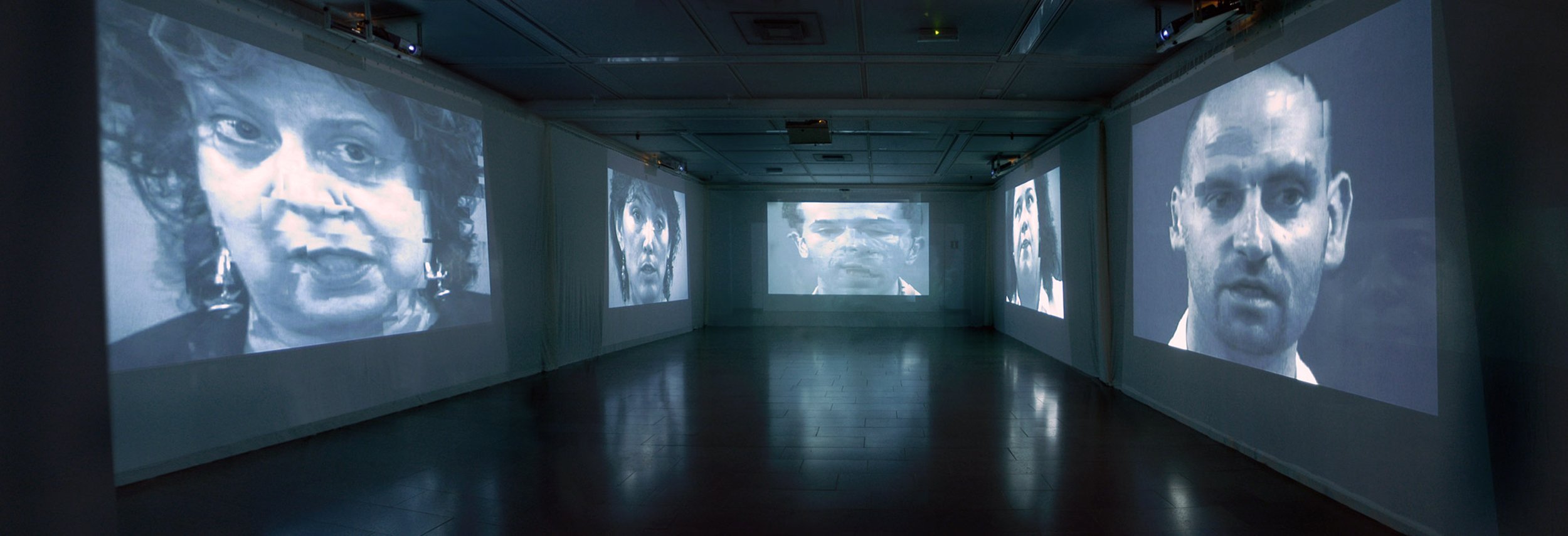
Richard Humann • Delicate Monster • Five-channel video installation • Variable dimensions • 2004
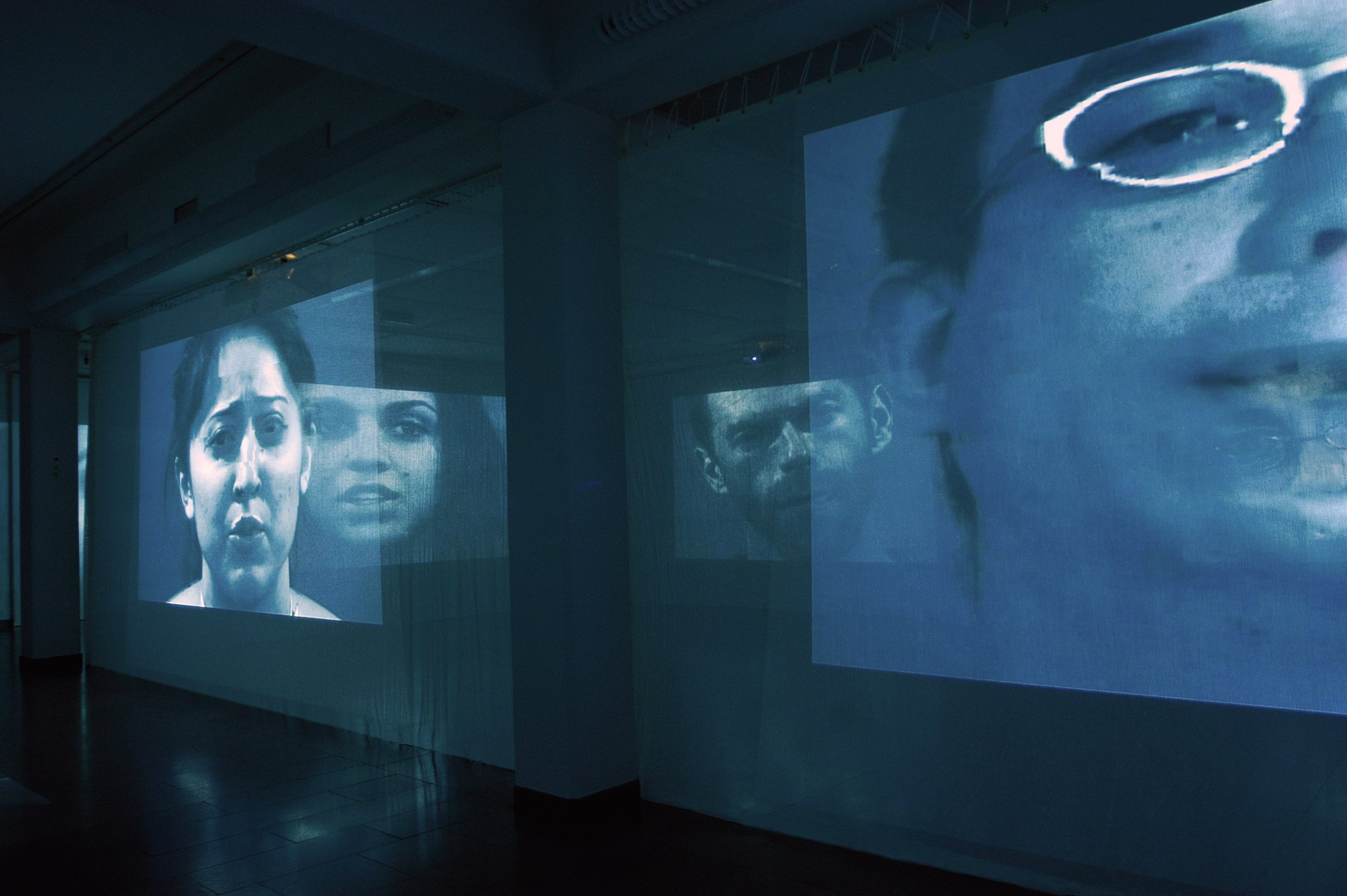
Richard Humann • Delicate Monster • Five-channel video installation • Variable dimensions • 2004
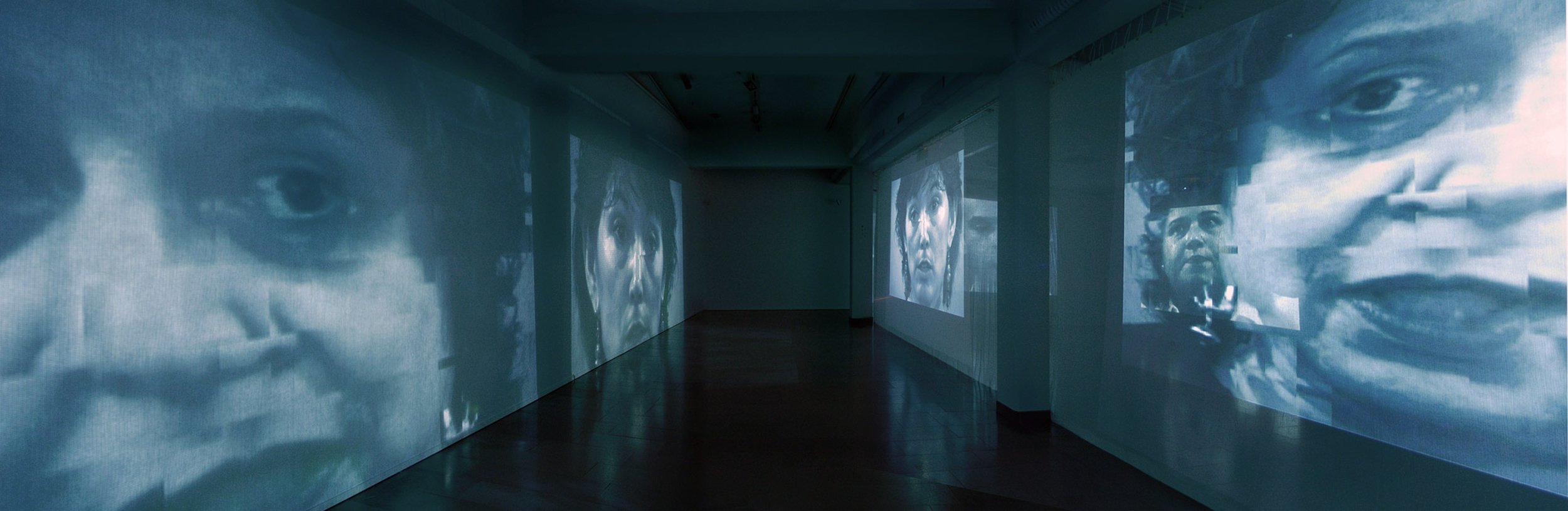
Richard Humann • Delicate Monster • Five-channel video installation • Variable dimensions • 2004

Richard Humann • Delicate Monster • Five-channel video installation • Variable dimensions • 2004

Richard Humann • Delicate Monster • Five-channel video installation • Variable dimensions • 2004

Richard Humann • Delicate Monster • Five-channel video installation • Variable dimensions • 2004
From the Delicate Monster museum catalogue:
Art is the most ancient expression of humanity’s desire to come to terms with our essential complexity. Even in its most abstract, linguistically and conceptually indecipherable manifestations, art is both a filter and a mirror of our will to image and to understand ourselves, one another, and the world we live in. In the work of Richard Humann, an artist and a creative thinker from New York, this will is strong and compassionate and timely. Delicate Monster, a poetic 5-projector video installation Humann has produced for the Tampere Art Museum, mines the metaphysics of human confusion and suffering as exposed in the facial and verbal landscape of the artist’s fellow New Yorkers who lived, like he did, through the physical and psychic terror of 9/11 and its enduring aftermath. Delicate Monster invites the audience at Tampere to contemplate the violence and trauma of an event that occurred far from this peaceful, pleasant city. Through a hypnotizing amalgam of images and words, Humann’s work speaks to us of the communality of human suffering, of mental shock that knows no national border, political creed or gender divide. Delicate Monster reminds us, perhaps, of the collection of war-induced scars that adorn the human surface of national history in every nation, also in Finland, a country that lost around 5% of its male population to the horrors of war in 1939–1944.
The destruction of New York’s Twin Towers on 9/11 changed the world as we know it. On that day, in the span of a few hours and with the anxious aid of twenty-first-century information technology, terrorism evolved from a regional calamity, the occasional news blip that posed no immediate danger, into a global menace; and thus the world slipped, delicately and monstrously, into a world war unlike any other humanity has endured before. The power of the event and its aftermath cannot be measured in the number of lives lost, not in the magnitude of the fiscal loss inflicted upon the infrastructure of the world’s largest market economy, nor even in the scope of the bullish territorial wars it spawned first in Afghanistan and more recently in Iraq. 9/11 has evolved into a complex and contradictory symbol—of anger and intolerance, of vulnerability and vengeance, of internationally intertwined agony, uncertainty and fear and the chaos that humanity invites upon itself through their synergy.
We live our lives in the vicinity of births and deaths, but these potent actualities become meaningful to us only in the form of symbols. Humann’s work at the Tampere Art Museum raises before our eyes the specter of a symbol that is both ancient and unforeseen, a symbol we recognize but cannot classify or fix into position because it both embraces and exceeds the communicative parameters of any one culture, community or language. In an echo of 9/11, Delicate Monsteris anchored to an oral cultural base, the evanescent human voice, that is, by definition, ineffable: like the traumatic event and its ongoing aftermath, Humann’s work is a restrained primal cry that speaks of humanity’s present condition in terms that cannot be deciphered through the handmaidens of Enlightenment logic, the letters of an alphabet. We have heard this sound before—it strikes us as an aural symbol as potent as the wailing of a beloved child—but its specific meaning remains as obscure, as mesmerizing, as it must have been in the beginning of time. Art, poetry and music constitute perhaps the only communal window through which we can reach our minds and imaginations towards a better understanding of the symbols of our being, our collective and communal identities, in space and time.
On behalf of the Tampere Art Museum, I would like to thank Richard Humann for opening a vista through one such window and for reminding us of our common humanity.
Janne Sirén, PhD
Museum Director
Tampere, 31.7.2004
-
“Four legs and two voices: a most delicate monster!”
– William Shakespeare, The TempestDelicate Monster gets its title from William Shakespeare's last play, The Tempest. It draws the similarity between the island of Manhattan and the fictional island where Prospero and his daughter were castaways, and where he caused the shipwreck of others by conjuring a mighty tempest through the use of magic.
The Tempest in this correlation and case, are the events of September 11, 2001, and the rippling effect that it had on New York City and the entire world.
The firsthand stories of the participants, although very personal and tragic, are universal throughout mankind. But unlike in The Tempest, there is no magic other than the innate human conditions of destruction and repair, and the collective willpower of survival and perseverance toward the goal of stability and normalcy.
Photo credits: Richard Humann Studio