Slides, slide projectors
Variable dimensions
2007

Richard Humann • Revolutions at Museo Cristóbal Gabarrón, Mula, Spain
In Revolutions, Richard Humann examines the cyclical nature of human invention, tracing the evolution of tools, weapons, shelters, animals, and other objects from their primitive origins through increasingly complex forms, only to return to where they began. Created for a solo museum exhibition at Fundación Casa Pintada, Museo Cristóbal Gabarrón, the installation uses eight slide projectors and hundreds of slides to animate these transformations across the museum walls.
The sequences follow the development of familiar objects and systems. A stone evolves into a hammer and then a modern stapling tool before reverting to stone. A cave becomes a hut, a suburban house, and a skyscraper, then returns to its primitive form. A wolf transforms into a miniature poodle; a stone wheel becomes a modern train wheel; a bison becomes domesticated cattle and eventually beef on a dinner plate. A simple stick develops into a spear, a rifle, and ultimately a nuclear missile, before the sequence reverses.
The projectors themselves contribute to the work’s meaning. Their mechanical noise fills the exhibition space, evoking the hammering and pounding of manual labor. This persistent sound connects the machinery of the installation to the physical effort behind human creation. While the images trace the evolution of tools and technologies, the projectors’ rhythmic clatter recalls the repetitive labor through which civilization has been built.
The title Revolutions carries several meanings central to the work. It evokes evolution, the gradual development of increasingly sophisticated forms, and revolutionary advances that fundamentally change how we live. At the same time, a revolution describes circular movement—a turning that eventually returns to its starting point. Humann brings these meanings together in sequences that advance through stages of development before reversing, transforming progress into a cycle rather than a straight line. The word itself captures the work’s central paradox: evolution moves forward, while revolution brings us around again.
This cycle carries a darker implication. The work recalls Albert Einstein’s often-quoted warning that a future world war might leave humanity fighting with sticks and stones. The most advanced products of human ingenuity, including nuclear weapons, may ultimately lead to the destruction of the very civilization that produced them. The possibility of returning to primitive beginnings becomes more than a formal device; it becomes a question about the fragility of progress itself.
Ultimately, Revolutions considers whether human development represents lasting advancement or a recurring cycle of creation, transformation, and collapse. The images evolve, reverse, and begin again, accompanied by the mechanical pounding of the projectors. Humann presents progress as both an extraordinary human achievement and a process whose direction is never guaranteed. What we create may transform the world, but it may also bring us full circle, back to the beginning.

Richard Humann • Revolutions at Museo Cristóbal Gabarrón, Mula, Spain
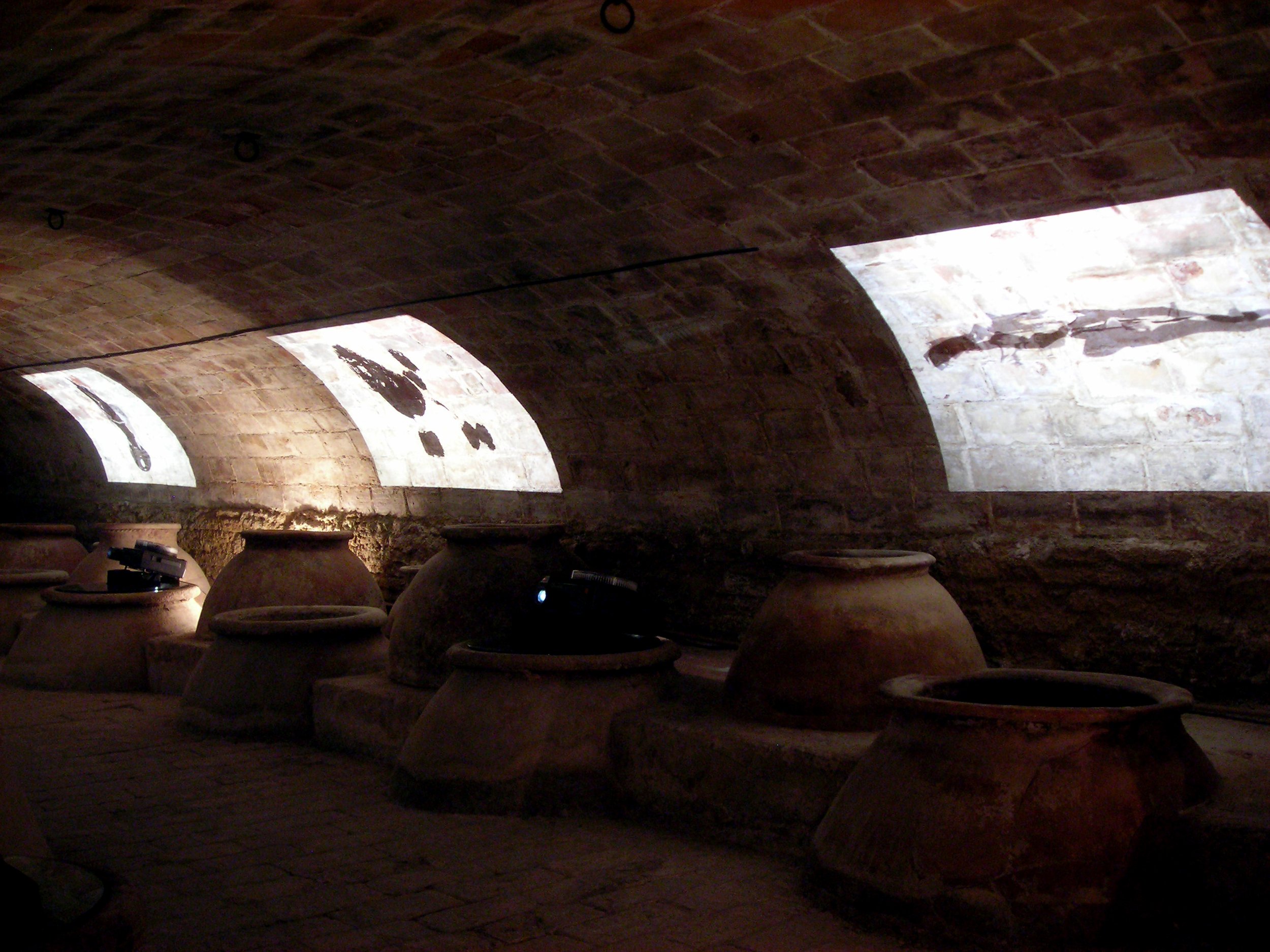
Richard Humann • Revolutions at Museo Cristóbal Gabarrón, Mula, Spain
Photo credits: Richard Humann Studio