Ascension
Augmented reality (AR)
Variable dimensions
2017

Richard Humann • Ascension installed over Venice, Italy • 2017 Venice Biennale
In Ascension, Richard Humann creates an alternate universe within our own through a location-based augmented reality (AR) installation presented during the 2017 Venice Biennale. Using an augmented reality app on a smartphone or tablet, viewers can discover twelve imaginary constellations suspended above Venice. The work reimagines the sky as a contemporary mythology, replacing the heroes, gods, and legends of antiquity with iconic figures and defining events of the twentieth century.
The constellations of the Western tradition draw heavily on ancient Greek mythology, in which heroes, villains, mortals, and gods were immortalized among the stars. Inspired by Joseph Campbell’s influential study of comparative mythology, The Hero with a Thousand Faces (1949), Humann superimposes a new constellation system over the existing sky. He transforms recognizable historical figures and cultural icons into symbolic characters, each accompanied by a condensed visual narrative. Through these imaginative combinations, familiar personalities become contemporary archetypes, embodying the aspirations, contradictions, and anxieties of modern civilization.
The narrative begins with The Great Wars, represented by two-headed dogs of war symbolizing World War I and World War II. The two heads evoke conflicts that were distinct yet connected, with the unresolved consequences of the first contributing to the conditions that led to the second. Together, the wars mark a violent threshold into the modern era, establishing a history in which technological advancement and human destruction increasingly develop side by side.
From this devastation emerges The Shining Suburb on the Hill, representing postwar America after 1945. The image evokes the promise of suburban prosperity, domestic comfort, and a new social order built around the ideal of the family home. Yet the title’s suggestion of an elevated ideal also invites questions about the distance between national aspirations and lived reality. The postwar dream offered security and abundance to many, while its promises were not equally available to everyone.
The Blue Moon King, a black-and-white bear representing Elvis Presley, captures the emergence of rock and roll as a transformative cultural force. The bear’s imposing physical presence suggests the power of a performer whose music helped reshape popular culture, while the blue moon introduces an element of fantasy and myth. Elvis becomes a modern king, elevated by mass popularity into a figure whose influence extended beyond music into fashion, identity, and the changing social attitudes of postwar America.
In The Gentle Beast, a whale-car hybrid spouting oil embodies the automobile and its profound impact on American life. The automobile opened vast distances to exploration, connected communities, and made travel more accessible, effectively shrinking the perceived size of the country. The whale introduces a creature of immense scale and power, while the oil it expels points to the resource that fuels this transformation. The combination conveys both the liberating promise of mobility and its dependence on fossil fuels, anticipating the environmental costs of a society built around the automobile.
The Tragic Queen, represented by a rabbit dressed in royal attire, is Marilyn Monroe. The rabbit’s familiar associations with softness and vulnerability contrast with the grandeur of its royal costume, suggesting the transformation of an individual into a public icon. Monroe’s image became a symbol of glamour, beauty, and desire, yet her life also revealed the pressures and vulnerabilities concealed beneath celebrity. The figure of the queen elevates her to cultural royalty, while the title acknowledges the tragedy behind the carefully constructed public image.
John F. Kennedy appears as The White Knight, standing proudly with a sword at his side and a nuclear briefcase at his feet. The knight traditionally represents honor, courage, and the defense of others, making him an apt figure for a president associated with ideals of public service and the promise of a new generation. Yet the nuclear briefcase introduces a contradiction: this emblem of peace is also equipped with the power of unprecedented destruction. Kennedy’s presidency unfolded during the Cold War and the Cuban Missile Crisis, when the possibility of nuclear war became an immediate global concern. His assassination in 1963 cut short his presidency, turning the promise embodied by the White Knight into a lasting image of interrupted possibility.
The cultural upheaval that followed is embodied by The Four-Headed Monster, an eight-legged creature with four revolver-shaped heads, representing The Beatles as they spread their message of love around the world. The revolver heads suggest the threat of violence, while the flowers held by the creature evoke peace, affection, and the countercultural ideals associated with the band. The combination of weaponry and flowers captures the contradictions of an era in which music became a vehicle for social change, offering an alternative to the violence and political divisions of the time. The monster’s multiple heads also suggest the collective identity of the group, whose combined influence became greater than that of any one member.
The Butterfly Bee represents Muhammad Ali, combining two seemingly incompatible creatures into a single figure. The butterfly evokes grace, lightness, and transformation, while the bee suggests energy, precision, and the capacity to strike. Together, they reflect Ali’s distinctive approach to boxing, which combined extraordinary footwork and agility with formidable power. Beyond the ring, Ali became an influential cultural and political figure whose public convictions challenged expectations of athletes and made him a symbol of personal independence and resistance.
In The Brave Explorer, Humann celebrates the astronauts and the space program that carried human beings beyond Earth for the first time. As the world became increasingly mapped and explored, the vastness of space offered a new frontier. The astronauts’ journey culminated in the Apollo 11 Moon landing in 1969, when human beings first walked on another celestial body. By describing these explorers as brave, Humann connects modern scientific achievement with the heroic journeys of ancient mythology. The astronauts become contemporary adventurers entering a realm that earlier cultures populated with gods, monsters, and celestial beings.
The Princess Adored represents Princess Diana through a beautiful rose growing on a thornless stem, with a ladybug at its heart. The rose evokes beauty, affection, and admiration, while the absence of thorns suggests an idealized figure seemingly untouched by the dangers ordinarily associated with beauty and prominence. The ladybug introduces a small, delicate presence at the center of the flower, reinforcing the image’s intimacy and vulnerability. Diana’s extraordinary relationship with the public made her a global figure of compassion and humanitarian concern, but her life under constant media attention also exposed the personal costs of becoming an object of worldwide fascination.
The Silicon Prophet turns to the digital revolution through the figure of Steve Jobs. Seated in the lotus position, the figure has an apple for a body, from which a young tree sprouts. The lotus position evokes contemplation and spiritual authority, while the apple connects the figure to Apple, the company Jobs helped build into a defining force in personal computing. The emerging tree suggests growth, cultivation, and the promise of future abundance. Jobs becomes a modern prophet of technological change, patiently nurturing an orchard whose products would reach millions. Yet the image also raises a broader question about technology’s growing influence: whether the systems created to extend human capabilities might eventually shape the ways we think, communicate, and live.
The narrative concludes with The Silver Tower, a tower made of silver coins toppled by a hawk-headed dove. The tower represents the World Trade Center, whose destruction in the terrorist attacks of September 11, 2001, marked a defining rupture in the transition to the twenty-first century. The silver coins evoke the economic power and commercial activity associated with the towers, while their collapse reveals the vulnerability of even the most imposing structures. The hawk-headed dove combines the traditional symbolism of peace with the predatory power of a bird of prey, suggesting the collision of opposing forces and the uncertainty of what follows catastrophe. With this image, Humann brings his constellation narrative to a turning point, leaving the future suspended between the possibility of another great war and the hope for peace and prosperity.
Through augmented reality, Humann overlays this invented mythology onto the physical city and sky, allowing viewers to encounter an alternative history within the familiar world. Each constellation compresses a complex cultural figure or historical event into a symbolic image, combining recognizable references with unexpected visual associations. The resulting narrative is neither a straightforward chronology nor a celebration of heroes. It is a reflection on the forces that have shaped modern life: war and peace, prosperity and vulnerability, celebrity and tragedy, scientific discovery and technological dependence.
The title Ascension evokes both the elevation of figures into the heavens and humanity’s enduring desire to transcend earthly limitations. In ancient mythology, the stars preserved stories of gods and heroes for future generations. Humann extends this tradition to the icons of modern history, suggesting that our own age creates its myths from musicians, political leaders, athletes, explorers, and technological innovators. Yet these contemporary figures are not simply elevated to eternal glory; their stories carry contradictions, failures, and unresolved consequences. By placing them among imaginary stars, Humann asks how the people and events we immortalize shape our understanding of history—and whether the mythology of our own time points toward another cycle of conflict or the possibility of a more hopeful future.

Richard Humann • Ascension (The Four-Headed Monster) installed over Venice, Italy • 2017 Venice Biennale

Richard Humann • Ascension (The Butterfly Bee) installed over Venice, Italy • 2017 Venice Biennale

Richard Humann • Ascension (The Silver Tower) installed over Venice, Italy • 2017 Venice Biennale

Richard Humann • Ascension (The Blue Moon King) installed over Venice, Italy • 2017 Venice Biennale

Richard Humann • Ascension (The Shining Suburb On The Hill) installed over Venice, Italy • 2017 Venice Biennale
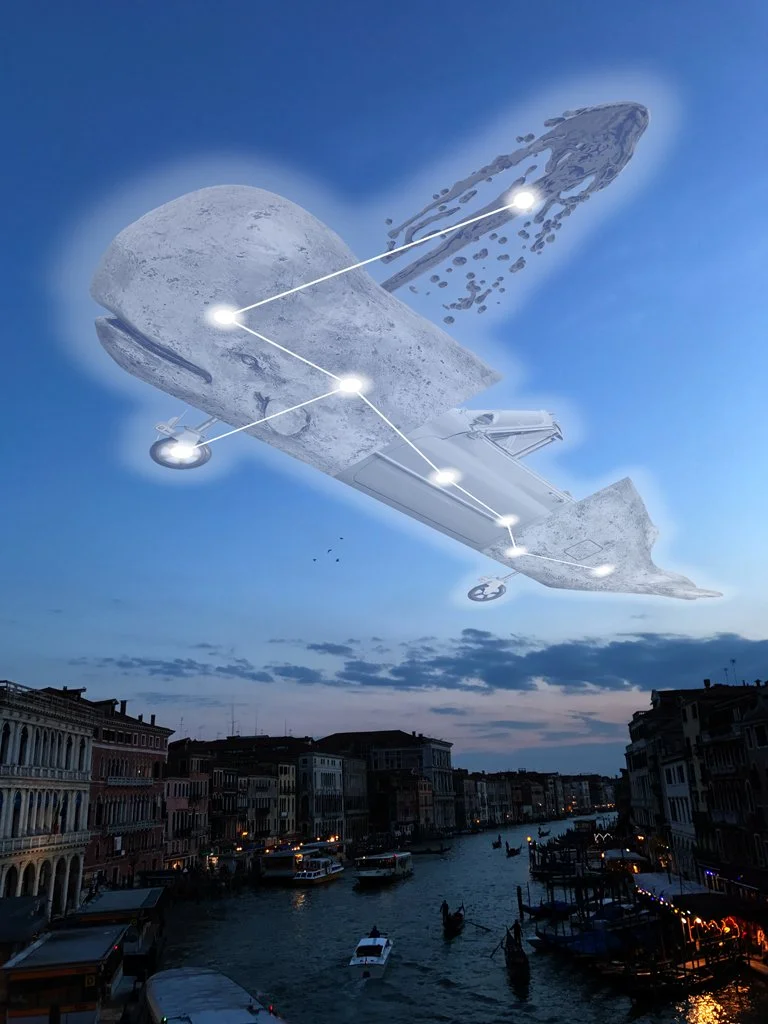
Richard Humann • Ascension (The Gentle Beast) installed over Venice, Italy • 2017 Venice Biennale
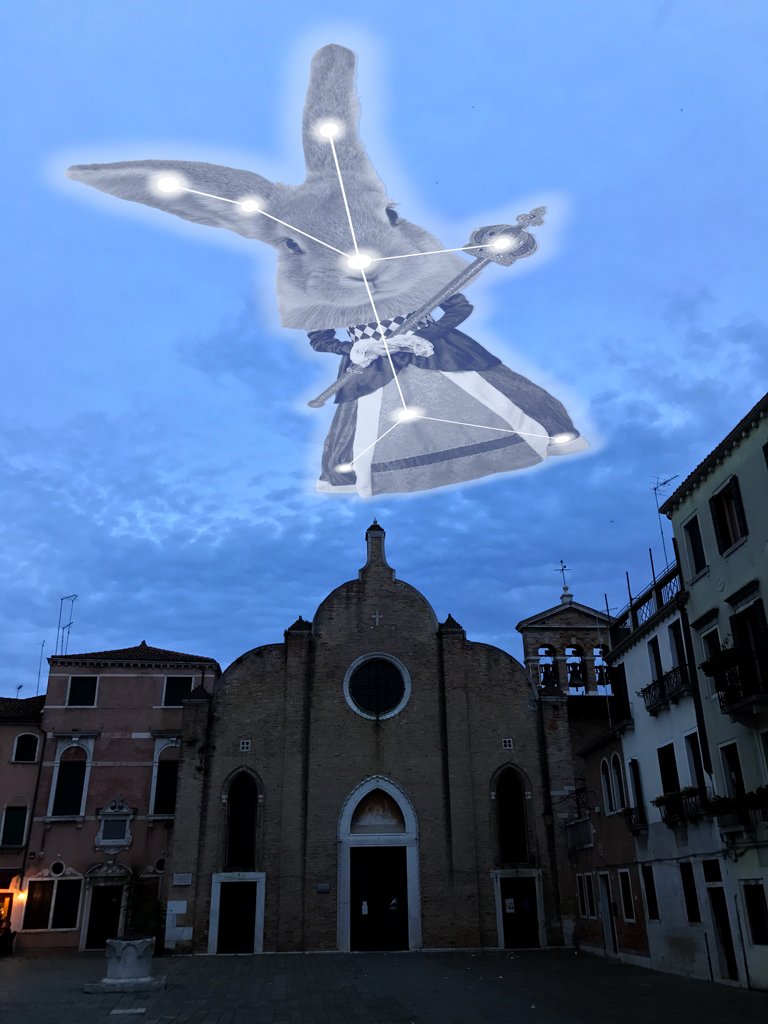
Richard Humann • Ascension (The Tragic Queen) installed over Venice, Italy • 2017 Venice Biennale
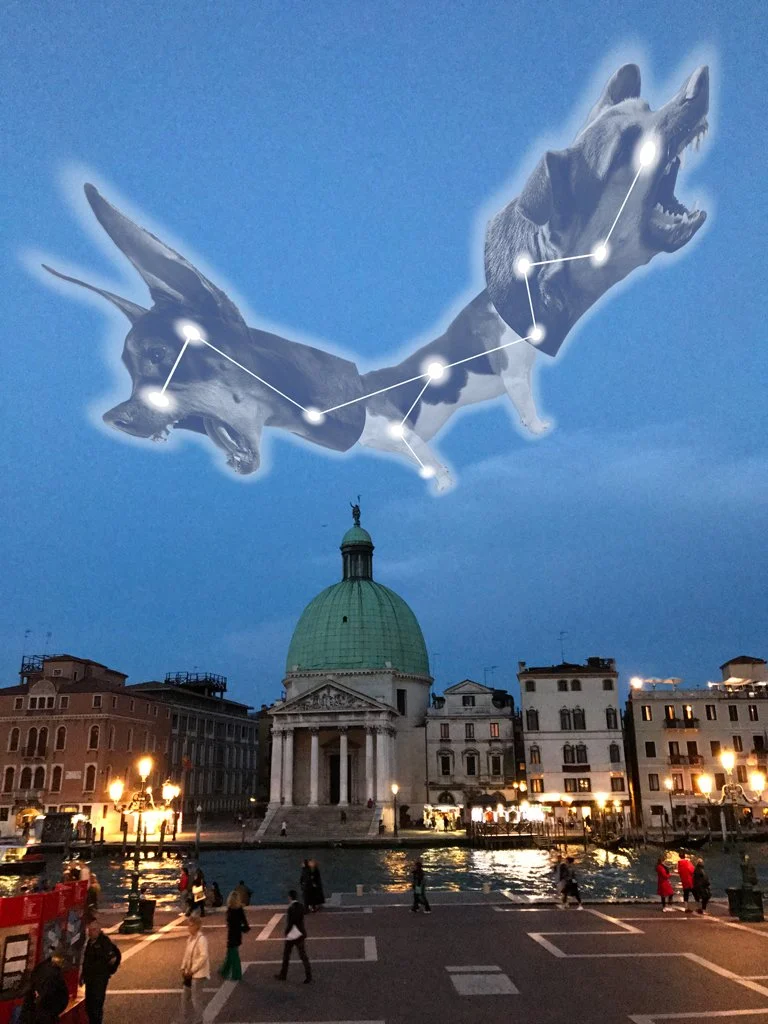
Richard Humann • Ascension (The Dogs of War) installed over Venice, Italy • 2017 Venice Biennale

Richard Humann • Ascension (Individual Elements) • Mixed media • Variable dimensions • 2017
Augmented reality (AR) powered by Membit
Photo credits: Richard Humann Studio