Short film
2020
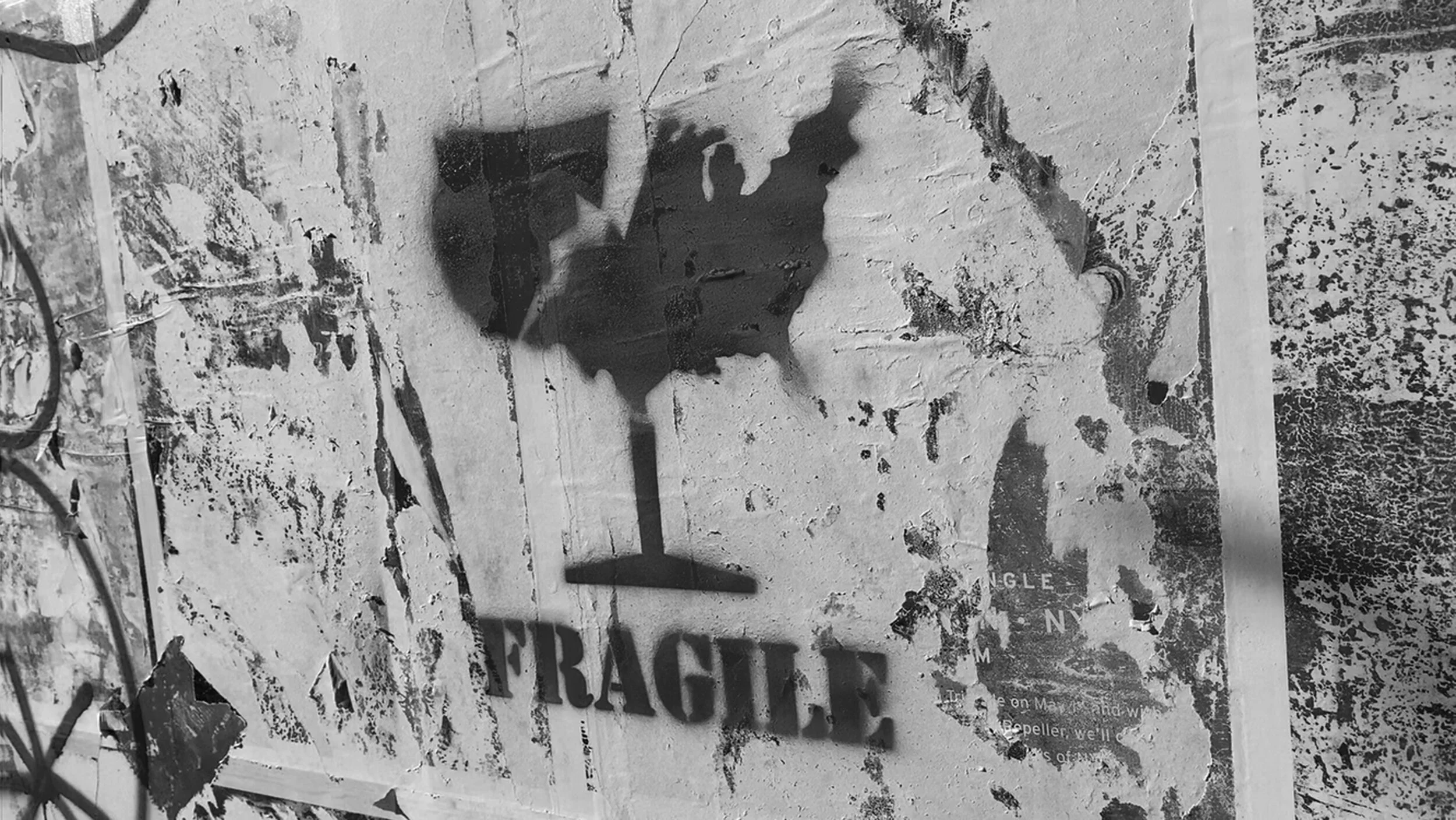
In Breakable, Richard Humann examines the vulnerability of American society through the language of street art, anarchy, and nihilism. At the center of the film is a stencil depicting the map of the United States balanced on a thin stem, accompanied by the word FRAGILE. The image combines two visual references: the fragile symbol spray-painted on wooden crates used to ship artworks, and the upside-down martini-glass symbol painted on the walls of New York’s East Village during the 1980s by Peter Missing and the Missing Foundation. By bringing these symbols together, Humann transforms a practical warning into a political image that questions the stability and authority of the nation itself.
The shipping symbol warns that an object can be damaged and must be handled with care. Applied to the map of the United States, it suggests that the nation is similarly vulnerable. The thin stem supporting the map exaggerates this precariousness, making the country appear capable of collapsing under its own weight. The Missing Foundation reference introduces a more anarchic impulse. Associated with an underground visual culture that challenged established authority and conventional social structures, its symbol brings the language of disruption into direct contact with the familiar outline of the nation. One symbol warns of damage; the other evokes the possibility of actively challenging the structures that organize society.
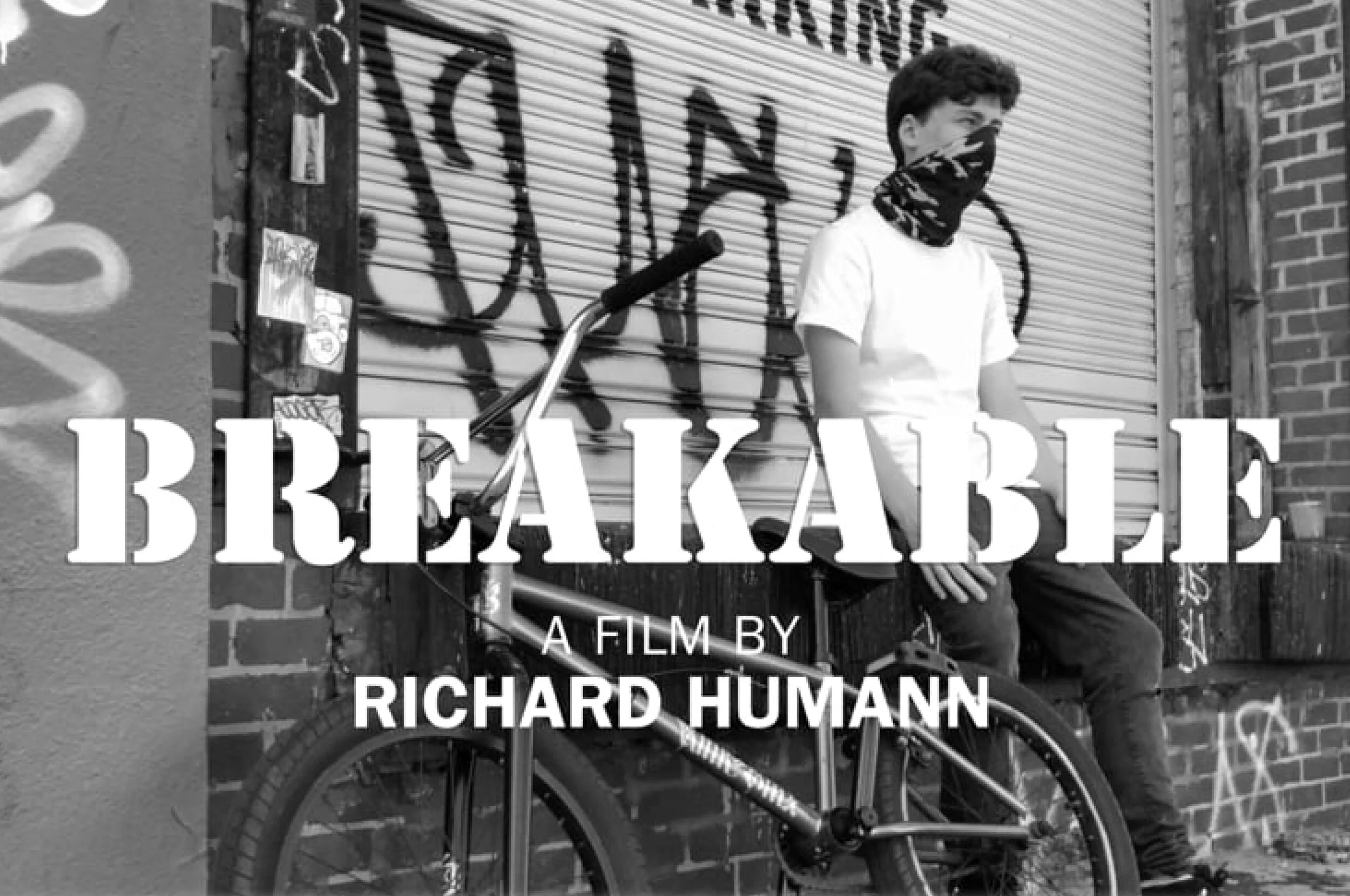
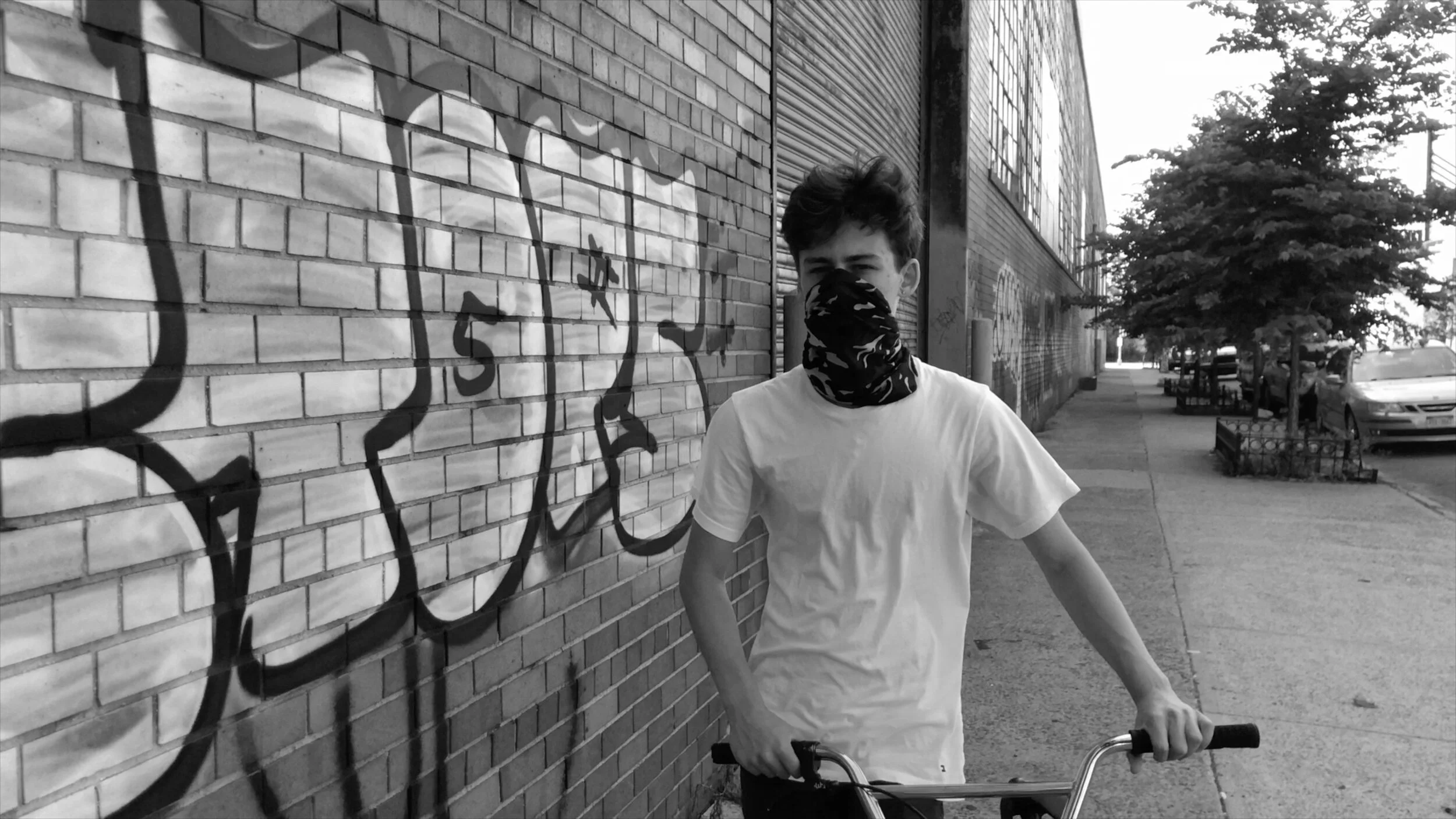
The film unfolds against walls covered with graffiti, slogans, and political messages, reflecting a society marked by conflict and uncertainty. References to the COVID-19 pandemic, Black Lives Matter, and the political climate surrounding Donald Trump establish a period of profound social tension. A teenage boy prepares the stencil, rides through the city, and places the image on a wall. His act becomes an intervention in public space, adding another statement to a landscape where competing voices struggle to define the meaning of America.
Anarchy enters the work as both a visual language and a question of authority. Graffiti disrupts the distinction between sanctioned expression and unauthorized intervention, turning the city wall into a contested space. The boy’s act similarly challenges the idea that national identity is fixed or beyond question. The map, ordinarily a symbol of territorial certainty and collective belonging, becomes unstable, balanced on a support too fragile to inspire confidence. Humann suggests that the structures sustaining a nation are not invulnerable simply because they appear permanent.
Nihilism introduces a darker possibility: that the values, institutions, and symbols through which a society defines itself may lose their authority or meaning. If the nation can be reduced to a fragile object, what remains of the certainty invested in its image? The work does not necessarily celebrate destruction or declare that meaning is impossible. Instead, it confronts the possibility that when established structures lose credibility, the impulse to dismantle them may coexist with uncertainty about what should replace them. The fragile map becomes an image of a society caught between the desire to preserve its identity and the urge to reject the systems through which that identity has been constructed.

Richard Humann • Breakable (video still) • Short film • 2020
Richard Humann • Breakable (video still) • Short film • 2020
Richard Humann • Breakable (video still) • Short film • 2020
Directed by: Richard Humann
Edited by: George LaGrange
Starring: Jared Humann
Photo credits: Richard Humann Studio